
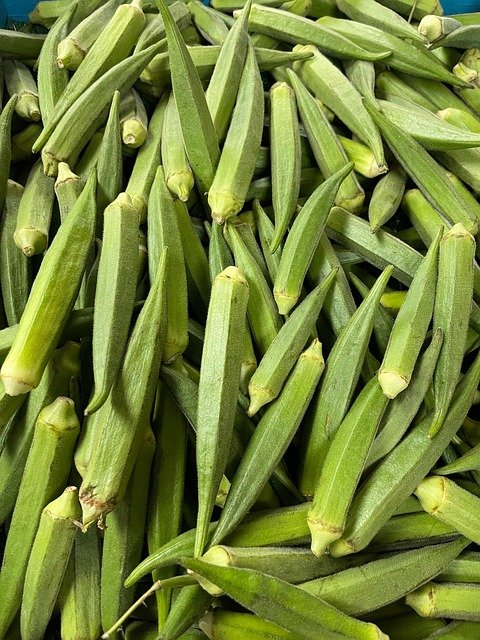
Okra is a plant species from the Malvaceae family whose immature pods are used as a vegetable. Okra is not an indigenous plant species in BIH, and it was domesticated in our region after the 15th century. Since okra originates from tropical and subtropical regions, in our country it should be sown in May when the danger of late frosts, to which it is very sensitive, has passed. The okra crop can be sown directly into the soil or can be produced from seedlings. Okra can grow up to 1 meter in height, which is why the sowing space should be planned. The inter-row spacing for okra sowing should be 80-90 cm, and the row spacing 20-30 cm. At the beginning of the growing season, okra is green, while later it becomes brown and woody. It is very important picking of immature okra pods regularly (about 5 cm in length), which allows for a longer-term use of this cultivated plant species. In human nutrition, okra pods are used fresh, dried, fried or boiled, and can also be stored frozen after blanching or in glass jars in brine.
In our country, okra is usually dried and used in soups and stews. After heat treatment of the pods, okra forms a characteristic slimy consistency. Okra pod extract can be added to various dishes to improve their density. Okra fruits are a rich source of potassium, calcium, magnesium, organic acids, tocopherol (vitamin E) and chlorophyll. Also, okra mucus binds cholesterol and allows the excretion of toxins that are eliminated by the liver. In addition, okra seeds are a source of oil with a concentration ranging between 20-40%. This oil is particularly rich in linoleic acid and is a significant source of polyunsaturated fatty acids essential for a healthy diet. The mucilage obtained from okra roots also has medicinal uses and is used as a substitute for blood plasma or to increase blood volume. Because of all the above this unjustifiably neglected plant species deserves a more significant place in our diet and wider distribution on cultivated areas.

